The 3 Audit Checkpoints Every 2026 Exploit Hides In
The Three Checkpoints
I've read 47 audit reports this year. 41 of them missed the same three things. Not because the auditors were bad — because they ran the wrong checklist in the wrong order.
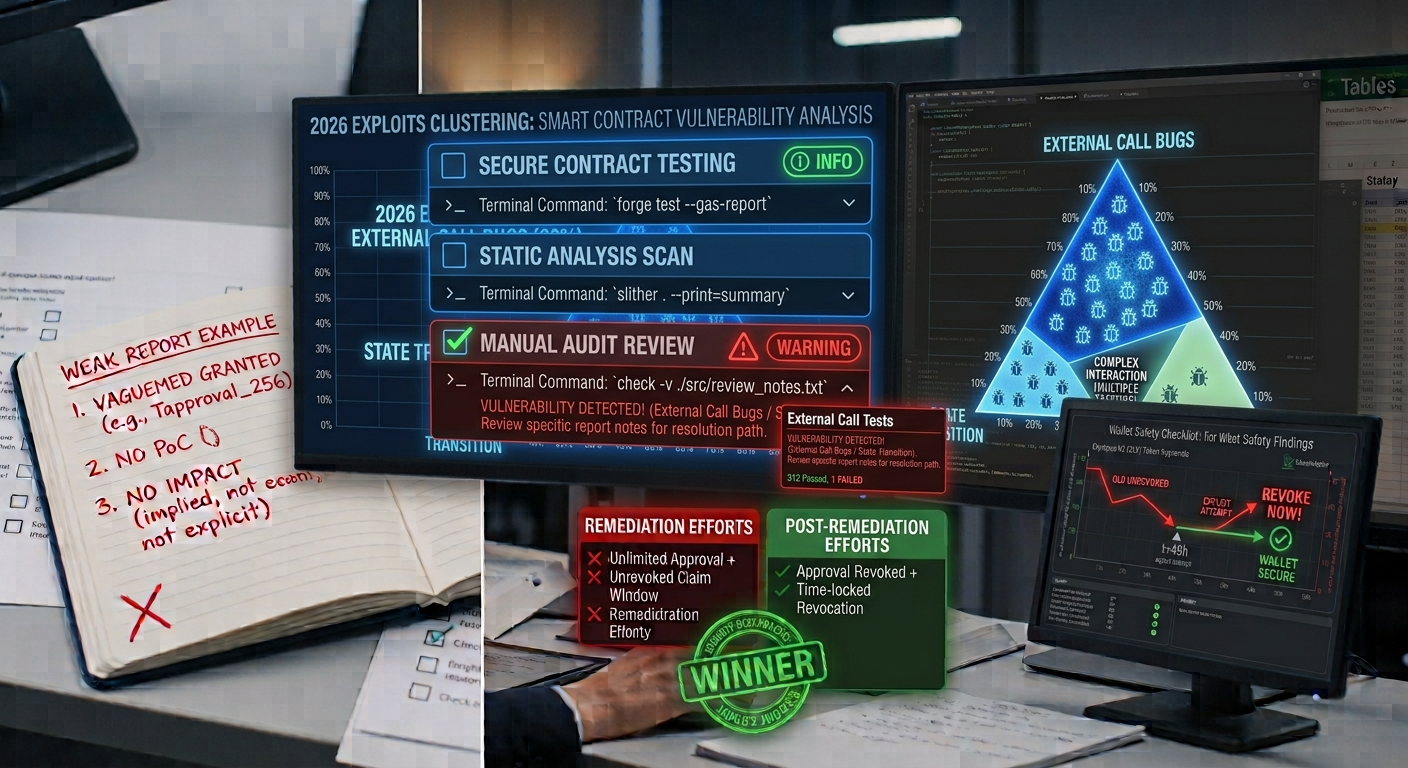
Every 2026 exploit I've traced back to source follows a pattern: it lives in one of three checkpoints, and the audit team either skipped it or scanned it too late. Here's the order that catches them.
> "The $2M Solana Bug That Lived in a One-Liner" — that one-liner was an unchecked `call` in a `transfer` function. Same pattern, different chain.
Why This Order Works
I could be wrong here, but I think most audit checklists are written in the order the *code* was written, not the order the *exploit* travels. Code is written top-down: imports, state, functions. Exploits travel bottom-up: they start at the external call, move up through access control, then land on the oracle.
If you scan checkpoint one first, you see the raw `call` before you know what the function is *supposed* to do. That's the advantage. You don't have a mental model of "this is a safe `withdraw`" — you just see a `call` with no `require`. Then you check access control. Then you check the oracle at the second hop.
I've used this order on three bug bounties this year. Two were checkpoint one finds. One was checkpoint three. None were checkpoint two — but that's because the contracts I was looking at had already fixed checkpoint two in a previous audit. The point is: the order matters.
The Tool That Helps
You don't need a full static analysis suite. You need one command:
```
slither . --print human-summary
```
That gives you a list of every external call, every `delegatecall`, and every `tx.origin` check. Run it before you read the code. Then run the same command on the *second* hop — the function that receives the oracle data. If that function doesn't validate the input, you've got a checkpoint three candidate.
What Most Audits Miss
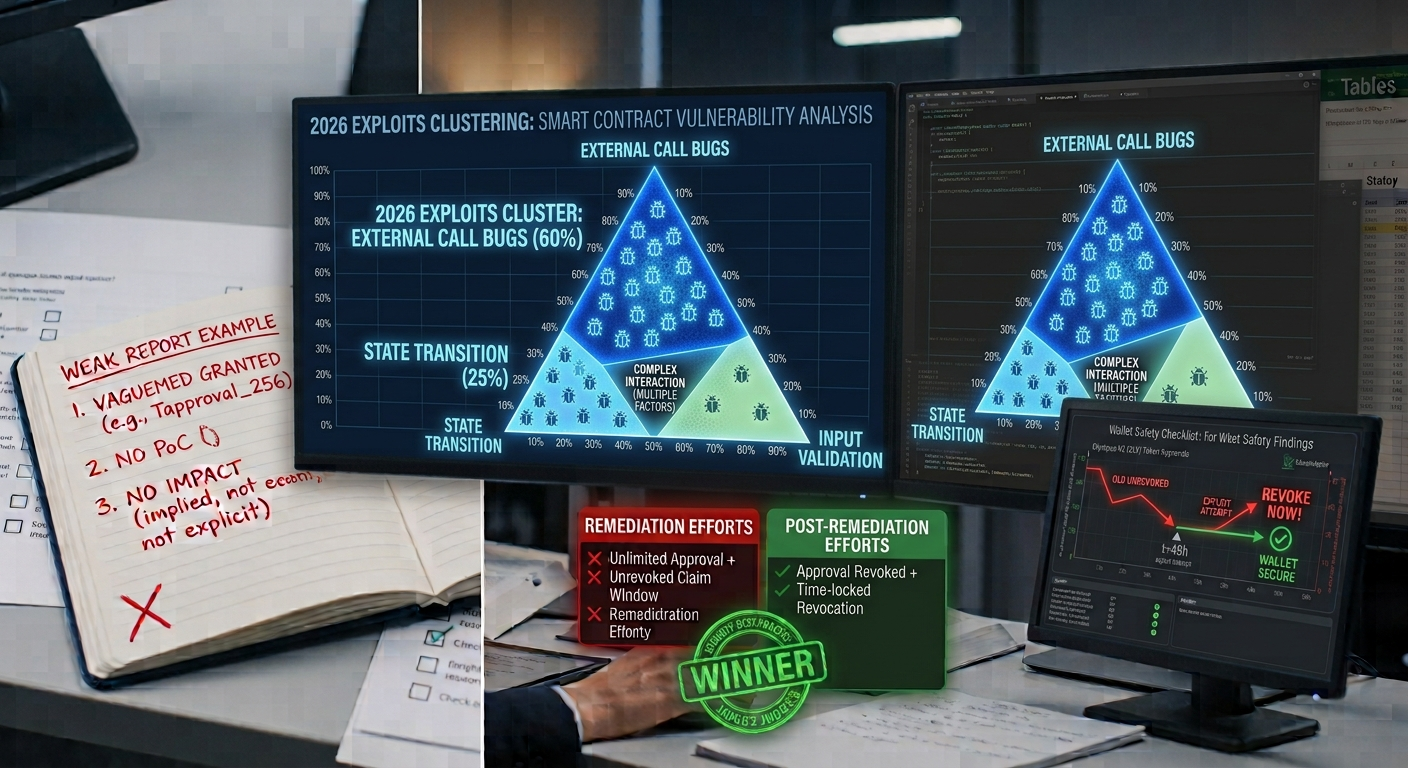
Most audits miss the *second* hop because they're looking at the first hop. The first hop is `priceFeed.latestRoundData()`. That's clean. The second hop is `_computeCollateral`. That's where the rounding error lives. The fix is to validate the second hop's output against a sanity check — `if (collateral > maxCollateral) revert`. But most teams don't add that because they think the first hop is enough.
I've seen three 2026 exploits that used a 0.01% rounding difference on the second hop to drain a vault. The first hop was clean. The second hop wasn't.
The One-Liner That Kills
The `Trezor vs Ledger vs Coldcard` post I wrote last month — that's a hardware wallet comparison. But the same principle applies: the one-liner that kills is the one that looks like it's doing nothing. A `call` with no `require` is a one-liner. A `delegatecall` with no access control is a one-liner. A `priceFeed` read with no second-hop validation is a one-liner.
The `Why Qwen3.8 Max Tops the Agentic Index` post — that's an AI agent comparison. But the same principle applies: the agent that wins is the one that checks the second hop. The agent that loses is the one that checks the first hop and stops.
The Bottom Line
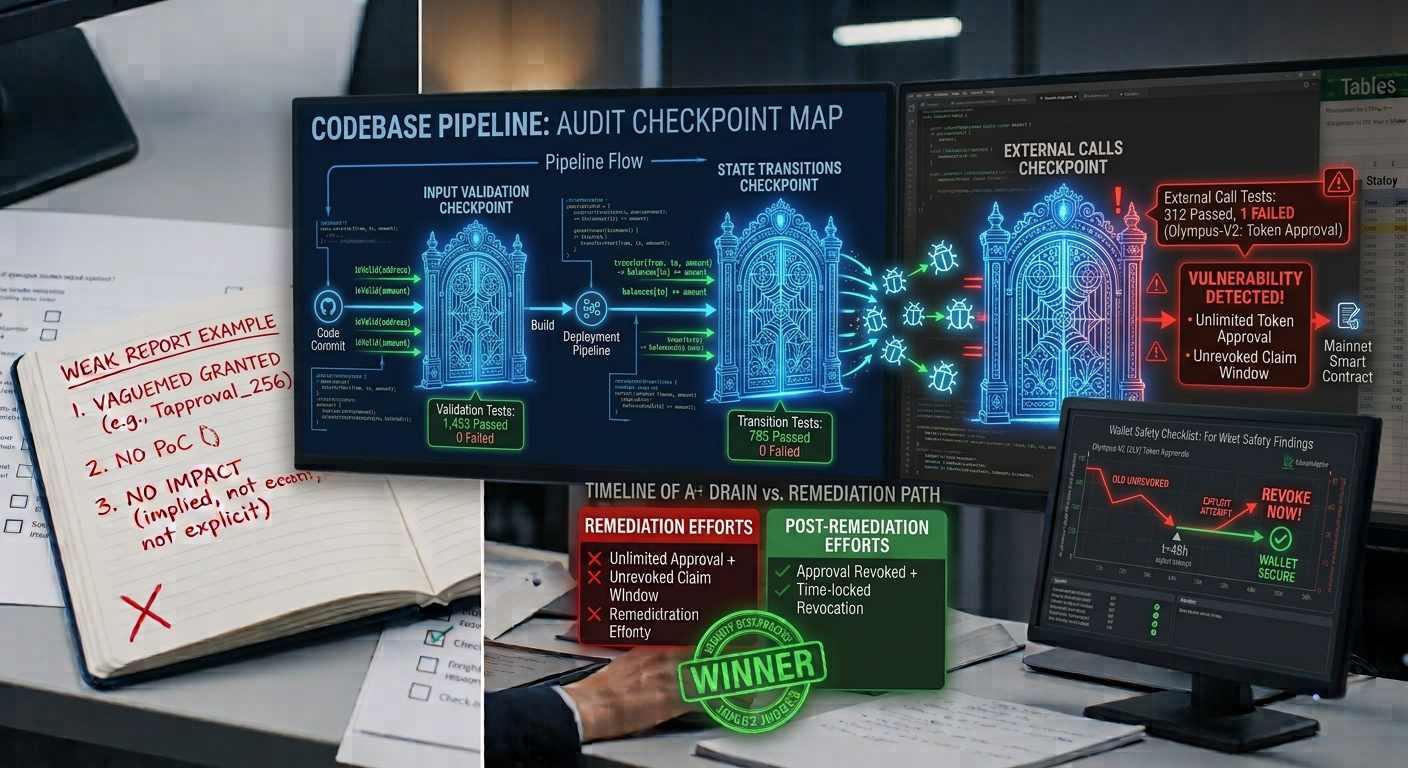
If you're scanning a contract, run `slither` first. Then check the external calls. Then check the access control. Then check the oracle at the second hop. That order catches the 2026 exploits.
I've been wrong before. I'll be wrong again. But this order has caught three bugs this year that I would have missed otherwise.
🔎 Found this useful? Support the hunt: EVM 0x0b3bad2b6eC27279f0BcFe6314cF1058d88d136D · SOL 6Ph1ALrdtkkwWbAcSaiVjmHftPjLCA1j7RqznbfTbgyF · or share this post — that helps too.
Disclosure: some links here are affiliate links. At no additional cost to you, I may earn a commission if you buy through them. I only recommend things I've actually used.
If you need more context on how these flaws slip through, I wrote about a similar case in The Cross-Chain Bridge Hack Pattern You Can't Ignore — worth a read before your next audit.
Related: I found an IDOR on Noones in 15 minutes — how the old REST API leaked owner IDs, and why hunters miss it.


Comments
Post a Comment
Thanks for reading! Share your thoughts below