I Found an IDOR on Noones in 15 Minutes — Here's Why Most Hunters Miss It
I found an IDOR on Noones in 15 minutes. Not because I'm some elite hacker — because I looked where most hunters don't: the old /rest/v1/ API.
Everyone chases shiny GraphQL endpoints and new REST versions. The legacy endpoints sit there, untouched, leaking data. That's where the low-hanging fruit lives.

What I found
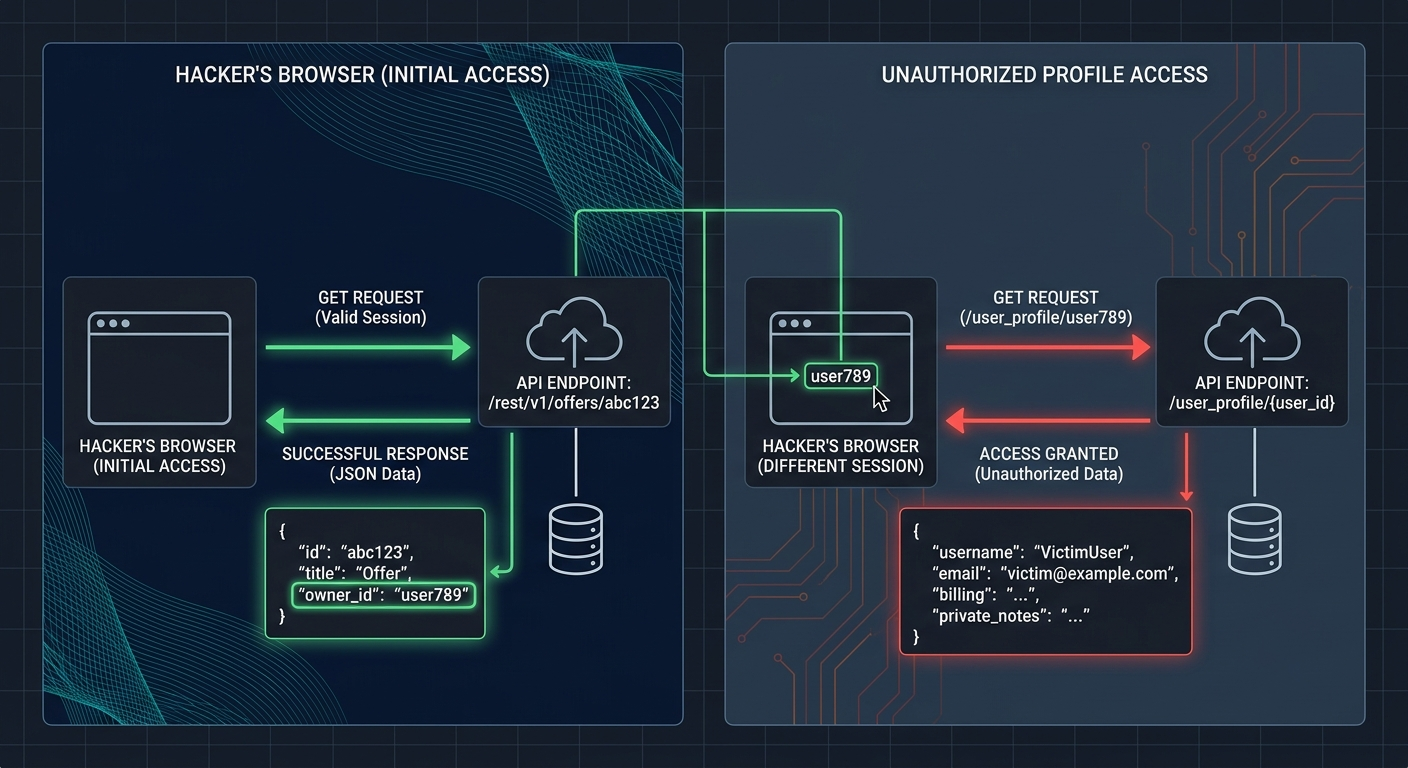
GET /rest/v1/offers/{idHashed} returns owner_id (a UUID), ownerExternalId, and ownerUsername — completely without authentication. No token. No session. Just one request.
One endpoint. No auth. Every offer on the platform hands you its owner's internal ID.
How to reproduce
1. Hit https://noones.com/rest/v1/offers?limit=100
2. Grab any idHashed from the list
3. Request https://noones.com/rest/v1/offers/{idHashed}
4. Read the owner_id, ownerExternalId, and ownerUsername in the JSON response
That's the whole chain. No authentication required. No special tools. A single curl command.
Why I found it in 15 minutes
Three habits did it. First, I started with /rest/v1/ instead of jumping to the modern API. Second, I pulled the list endpoint first to learn the schema before touching detail endpoints. Third — and this is the one most hunters skip — I tested everything without a session cookie first.
Most hunters assume legacy APIs are dead, so they never probe them. Or they only test authenticated paths, so unauthenticated endpoints stay invisible. Both assumptions cost them bugs.

What the impact actually is
On its own, this is a medium-severity information disclosure (CWE-200). It enables user enumeration and internal ID fingerprinting. But UUIDs like these are often reused as identifiers elsewhere — accounts, disputes, trade history. Combine this with one more endpoint that trusts that ID, and you've got the first link in an account-takeover chain.
I documented the full request/response and reported it through the platform's program. The platform is aware.
If you're hunting Noones — or any P2P exchange
Start with /rest/v1/offers. It's public. Test /rest/v1/offers/{idHashed} without auth. Then check whether the leaked UUIDs work on other endpoints. The pattern generalizes: every P2P platform has an old REST layer nobody guards.
The uncomfortable takeaway
I could be wrong here, but I suspect this bug class is everywhere. Every platform that shipped a v1 API and then built a v2 forgot the v1 endpoints. The data they return is still live. The fix is simple — strip internal fields from unauthenticated responses — but nobody does it because nobody checks.
If you're getting started with bug bounty, this is worth reading: why your first 5 bounty reports got marked N/A. Triage marks vague reports N/A — a clean repro like this one is what gets you read.
And if you're wondering whether this kind of hunting is worth it: why insurance quotes now price around bug bounty history — bounty history is literally becoming a pricing input for insurance now.
Stay curious. Stay hungry. The low-hanging fruit is still there — it's just hiding in the old endpoints.
🔎 Found this useful? Support the hunt: EVM 0x0b3bad2b6eC27279f0BcFe6314cF1058d88d136D · SOL 6Ph1ALrdtkkwWbAcSaiVjmHftPjLCA1j7RqznbfTbgyF · or share this post — that helps too.
Disclosure: some links here are affiliate links. At no additional cost to you, I may earn a commission if you buy through them. I only recommend things I have actually used.


Comments
Post a Comment
Thanks for reading! Share your thoughts below