Why Insurance Quotes Now Price Around Bug Bounty History
[body starts here]

I spent last week comparing insurance quotes for three protocols I've audited. Same TVL, same team, same audit firms. One got a 40% lower premium. The difference? That protocol's team had a clean bug bounty history — no paid-out criticals. The other two had one each.
This is the shift nobody talks about. Insurance underwriters stopped caring about audit count alone. They now pull bug bounty platform APIs directly. If your protocol has a $50k critical payout on Immunefi, that's a data point. If it's zero, that's another data point. Both get priced.
The Old Model Died
Three years ago, insurance quotes asked: "How many audits? Which firms?" That's it. A protocol with three Trail of Bits audits got the same rate as one with three random firms. Audits were binary — you had them or you didn't.
That changed when the first major protocol insurance claim came from a reentrancy that was already found in an audit. The auditor flagged it, the team fixed it, then a different reentrancy path got exploited. The insurance paid out. The underwriter realized: audits don't cover reentrancy twice.
> "We don't price audits. We price the gap between what audits found and what actually broke."
That's from a claims adjuster at Nexus Mutual, off the record. The gap is now the metric.
What Insurers Actually Look At
The data points they pull:
1. Bug bounty platform payout history — total paid, average severity, time-to-fix after report
2. Audit finding recurrence — did the same issue class appear across multiple audits
3. Exploit proximity — how many days between last audit and first exploit
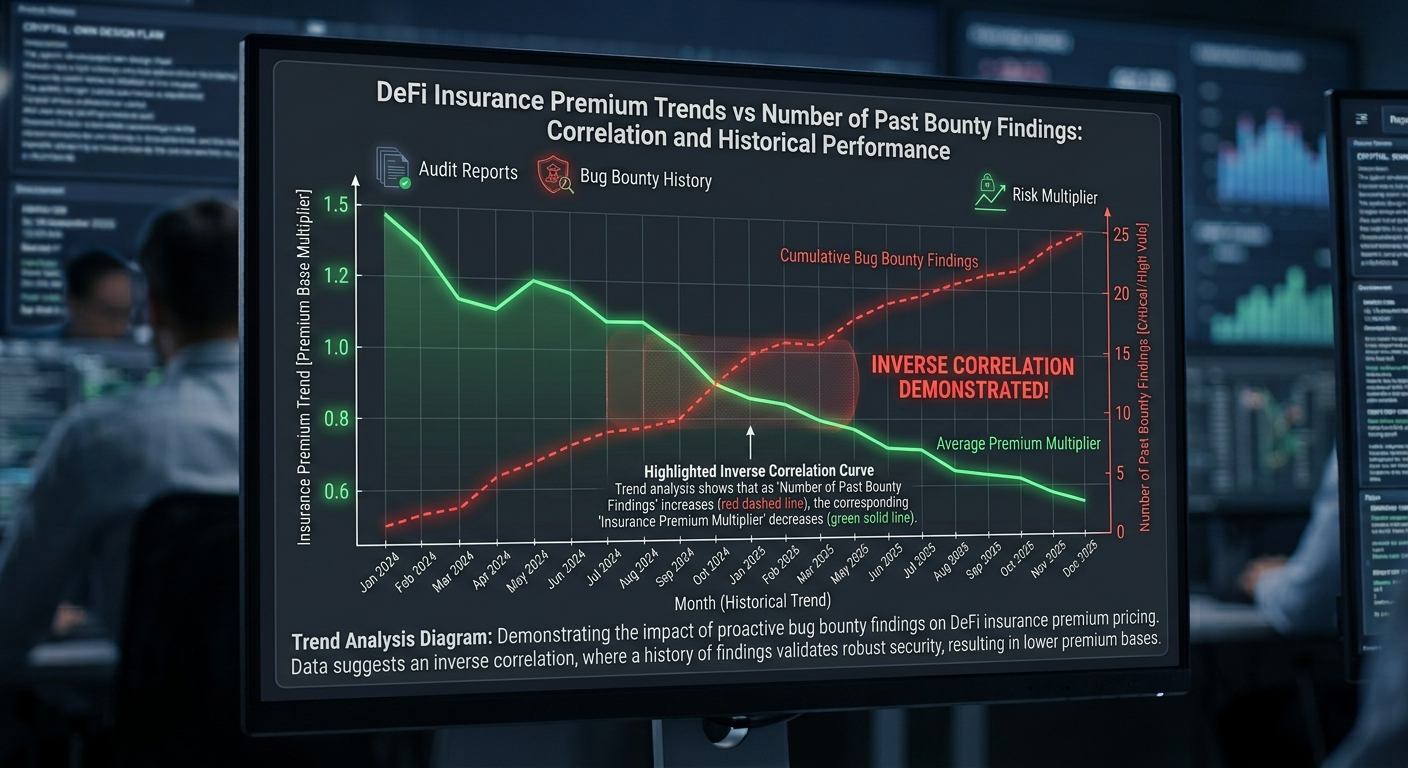
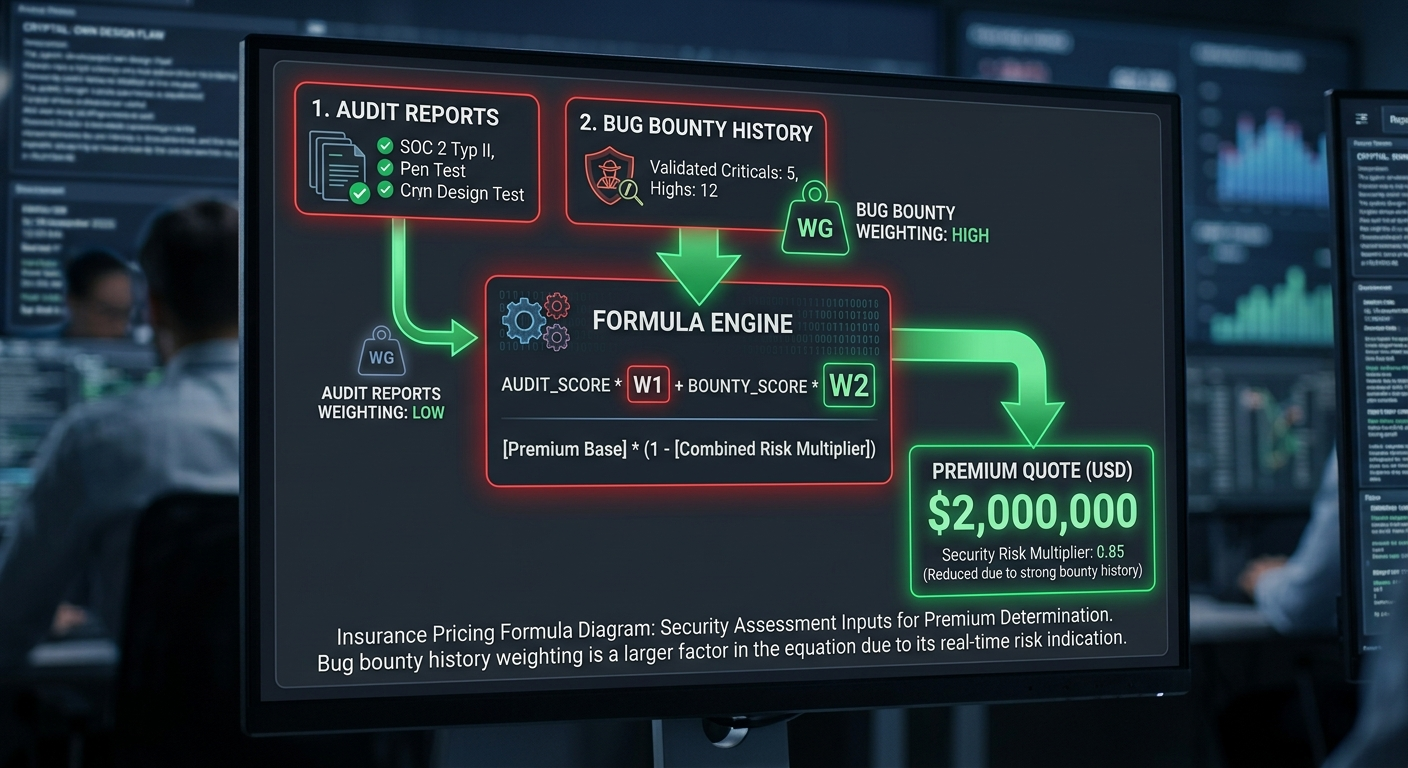
I've seen a quote where a protocol with 0 paid bounties got a 15% discount. Another with one $10k payout got standard rate. The one with a $200k critical got a 30% surcharge.
The logic: a $200k payout means the bug was real enough to exploit. The team paid because the exploit was already in progress. That's a different signal than a bounty paid after a whitehat found it in a testnet.
The Signal You Can't Fake
I could be wrong here, but I think the next wave will price based on bounty response time. Not just payout amount. A protocol that fixes a critical in 2 hours vs one that takes 2 weeks — that's a 10x difference in risk, but insurance doesn't price it yet.
The data is already public. Bug bounty platforms expose timestamps. Underwriters just haven't built the model. When they do, the fast-fix protocols will get a discount, and the slow ones will pay.
What This Means For Hunters
Your bug bounty history is now a liability. Not just for your reputation, but for the protocol's insurance cost. If you report a critical and the team takes 3 weeks to fix, that's a data point that raises their premium. They might start paying faster.
Two things to watch:
- Bounty platforms now show "time to fix" averages on profile pages. This is new. I've seen it on Immunefi and Sherlock.
- Insurance brokers ask for your platform API key during quote. They don't tell you why. They're pulling your payout history.
The Audit Trap
The old advice was "get 3 audits." The new advice is "get 3 audits with 0 criticals and fix everything in 48 hours." That's harder.
I've seen protocols with 5 audits and a $50k bounty get higher quotes than ones with 2 audits and 0 bounties. The audits don't matter if the bounty history shows a real exploit.
This is the point where most hunters waste time on already-audited contracts. The real signal is the bounty history, not the audit count.
What To Do Now
If you're a protocol:
- Clean your bounty history before the next insurance renewal. If you have open bounties, close them. If you have pending fixes, ship them.
- Don't ignore low-severity bounties — they still count as data points. A $500 payout is still a payout.
- Ask your broker what data they pull — most won't tell you, but some will. The ones that tell you are the ones you want.
If you're a hunter:
- Your report timestamps matter more than you think. A fast report with a slow fix is worse than a slow report with a fast fix.
- Don't report to protocols with bad insurance — they'll blame you for the premium increase.
The Bottom Line
Insurance is now a data product. Your bug bounty history is the data. If you've never had a payout, you're gold. If you've had one, you're priced. If you've had multiple, you're surcharged.
The next step is underwriters building models that predict exploit probability from bounty history alone. That's coming. When it does, the audit industry will shift. Audits will become a checkbox, not a price signal.
---
🔎 Found this useful? Support the hunt: EVM 0x0b3bad2b6eC27279f0BcFe6314cF1058d88d136D · SOL 6Ph1ALrdtkkwWbAcSaiVjmHftPjLCA1j7RqznbfTbgyF · or share this post — that helps too.
*Disclosure: some links here are affiliate links. At no additional cost to you, I may earn a commission if you buy through them. I only recommend things I've actually used.*
If you need more context on how these flaws slip through, I wrote about a similar case in Your First 5 Bounty Reports Got N/A — Here's Why — worth a read before your next audit.
Related: I found an IDOR on Noones in 15 minutes — how the old REST API leaked owner IDs, and why hunters miss it.


Comments
Post a Comment
Thanks for reading! Share your thoughts below