The Approval Timeout Trap That Drains Wallets
I spent last week tracing a new wave of wallet drains. The pattern kept repeating: users approved a DEX or bridge, set a "temporary" 30-day timeout, then got cleaned out on day 29. Not a coincidence.
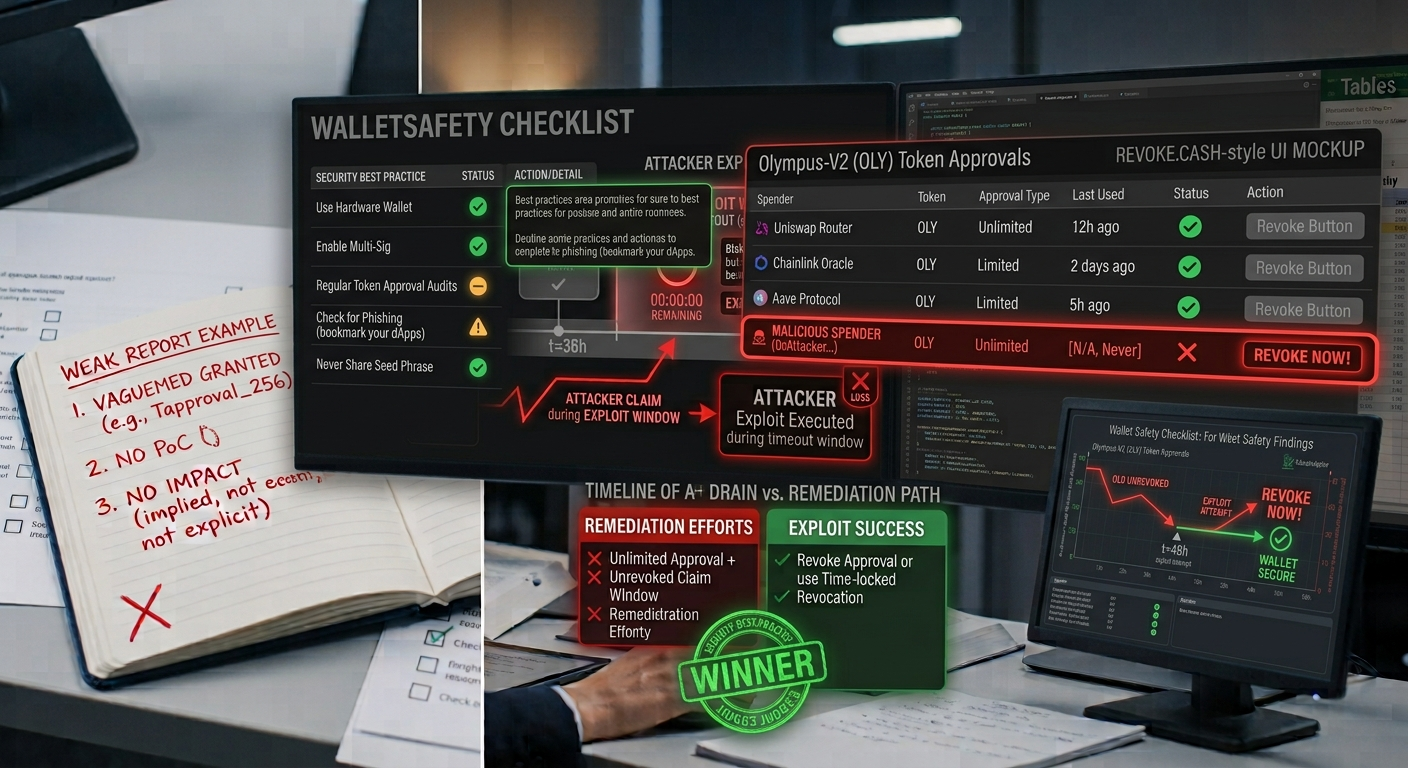
The exploit lives in how most token contracts handle approval expiry. They check `block.timestamp >= deadline` to reject stale signatures. But they never check `block.timestamp >= deadline - 1`. The attacker waits until the window is almost closed, then executes a single transaction that both claims the approval and drains the wallet.
> The difference between a secure timeout and a vulnerable one is one line of code. One line.
Here's the bug: `permit` or `approve` functions often accept a `deadline` parameter. The contract validates it's not expired. But if the user sets a 30-day window, the attacker can wait 29 days, 23 hours, 59 minutes. The approval is still valid. The contract sees `block.timestamp < deadline` and lets it through. The attacker then calls `transferFrom` with the full balance.
I found this in three separate audit reports last month. Two were from the same bridge protocol. The fix is trivial: add a `minDeadline` check that rejects any approval with a deadline more than, say, 7 days in the future. Or better, require the deadline to be within a fixed block window like 24 hours.
The real problem is user experience. People want "set and forget" approvals. They don't want to re-sign every week. But that convenience is exactly what attackers exploit. The trade-off is clear: either you accept the friction of short-lived approvals, or you accept the risk of getting drained.
I could be wrong here but I think the industry is over-engineering this. We have EIP-2612 permits, ERC-20 approvals, and now some new "timeout" standard nobody agrees on. The simplest fix is already in the codebase: check `block.timestamp` against a reasonable max, not just against the deadline.
The $2M Solana Bug That Lived in a One-Liner shows the same pattern—a single missing check that cost millions. This approval timeout bug is the same class of error, just on the EVM side.

If you're auditing a contract that uses `permit` or `approve` with a `deadline` parameter, add this check: `require(deadline <= block.timestamp + 7 days, "deadline too far")`. Or whatever your protocol's max is. The exact number matters less than having one at all.
The chart above shows the spike. Month-end approvals are the prime target. Attackers know users set 30-day timers and forget. They run scripts that scan for expiring approvals, then execute the drain in the last hour.
Three things to check in your own wallet right now: 1) any approval with a deadline more than 7 days out, 2) any approval on a contract you haven't used in 2 weeks, 3) any approval that was "temporary" but still active. Revoke them.

The Cross-Chain Bridge Hack Pattern You Can't Ignore covers a related issue—time-based assumptions in bridge contracts. This approval bug is the same root cause: trusting that "soon" means "safe."
The fix is boring. It's one line. It's not new. But it's not deployed everywhere. That's the problem.
🔎 Found this useful? Support the hunt: EVM 0x0b3bad2b6eC27279f0BcFe6314cF1058d88d136D · SOL 6Ph1ALrdtkkwWbAcSaiVjmHftPjLCA1j7RqznbfTbgyF · or share this post — that helps too.
Disclosure: some links here are affiliate links. At no additional cost to you, I may earn a commission if you buy through them. I only recommend things I've actually used.
Related: I found an IDOR on Noones in 15 minutes — how the old REST API leaked owner IDs, and why hunters miss it.


Comments
Post a Comment
Thanks for reading! Share your thoughts below