The $25M MEV Bot Lesson: Why Your Own Code Can Drain You
---
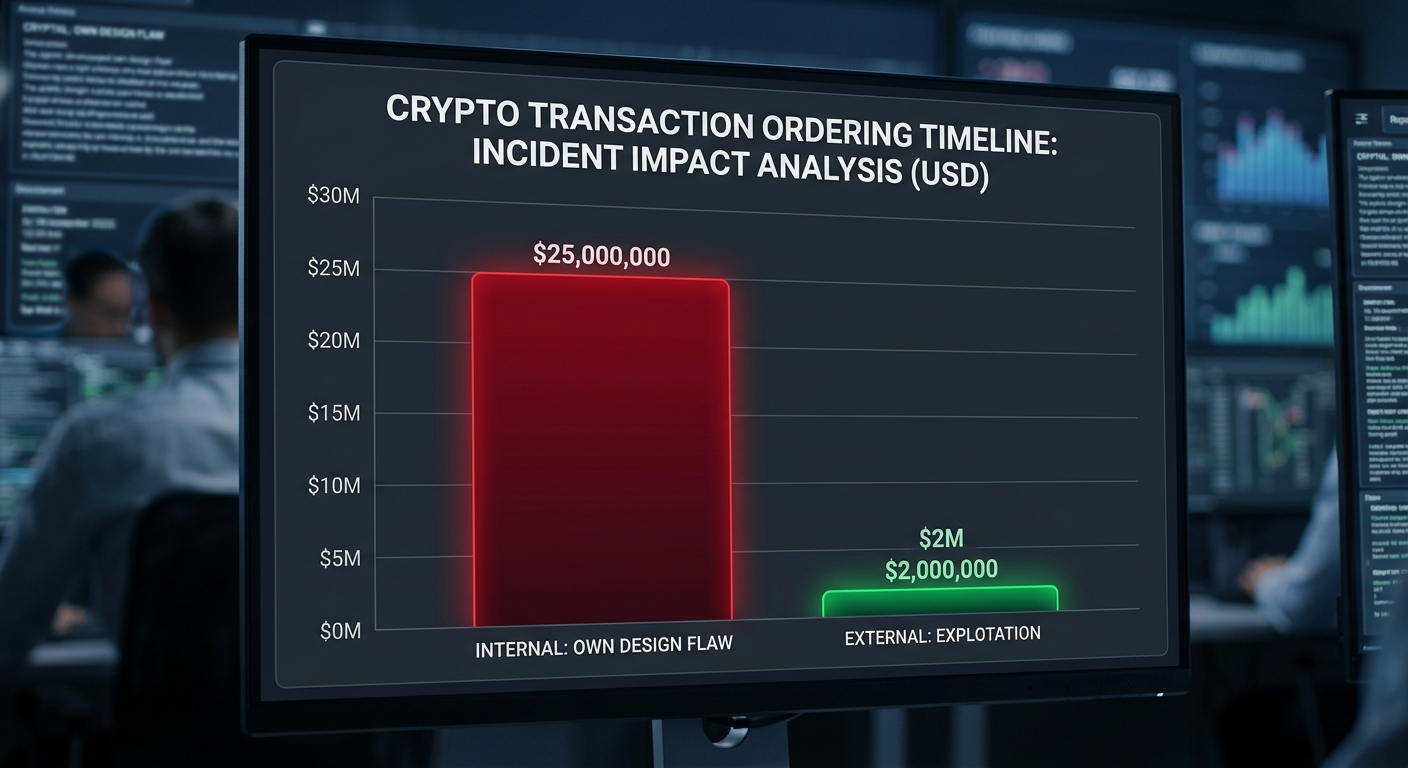
I watched a MEV bot bleed $25M in under 60 seconds. Not from an external attacker—from its own code. The bot had a transaction-ordering bug so obvious in hindsight that I still cringe thinking about it.
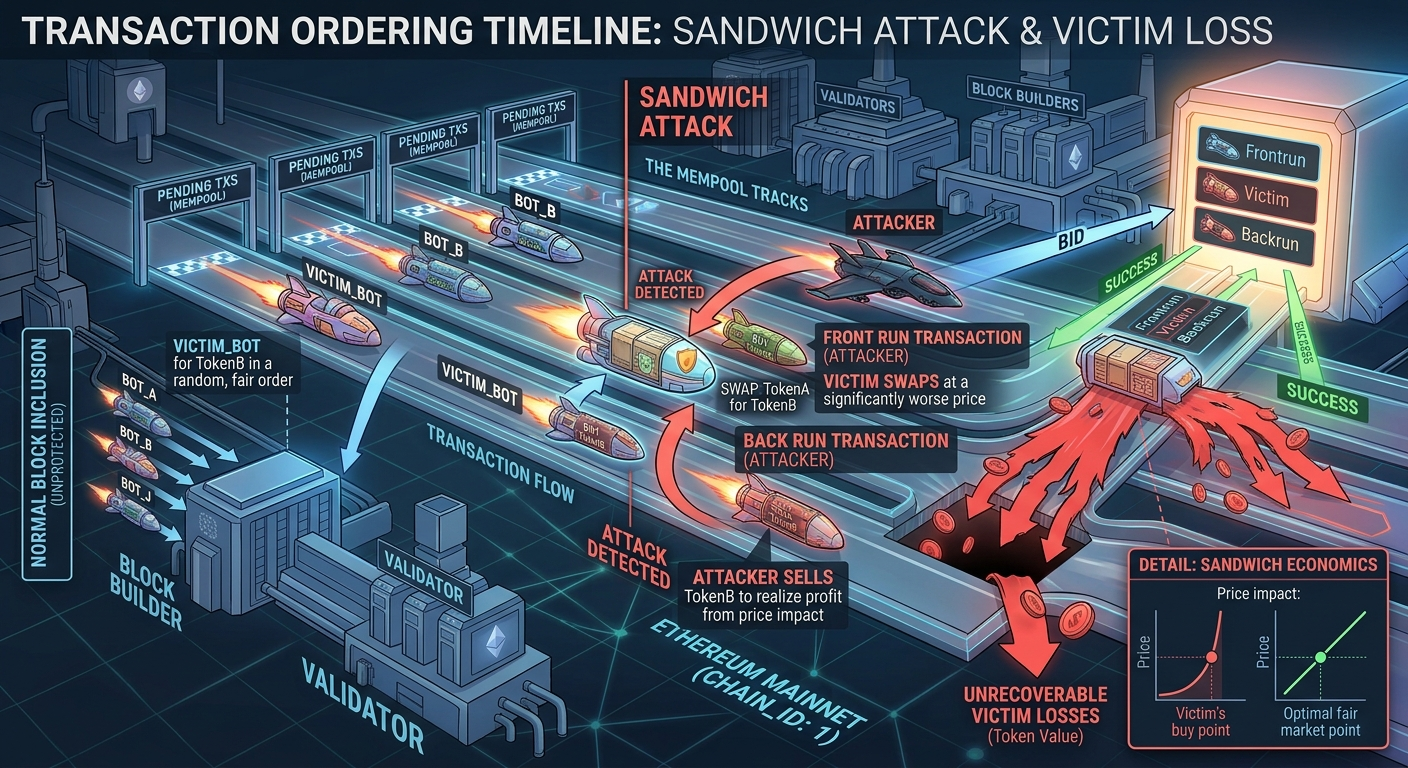
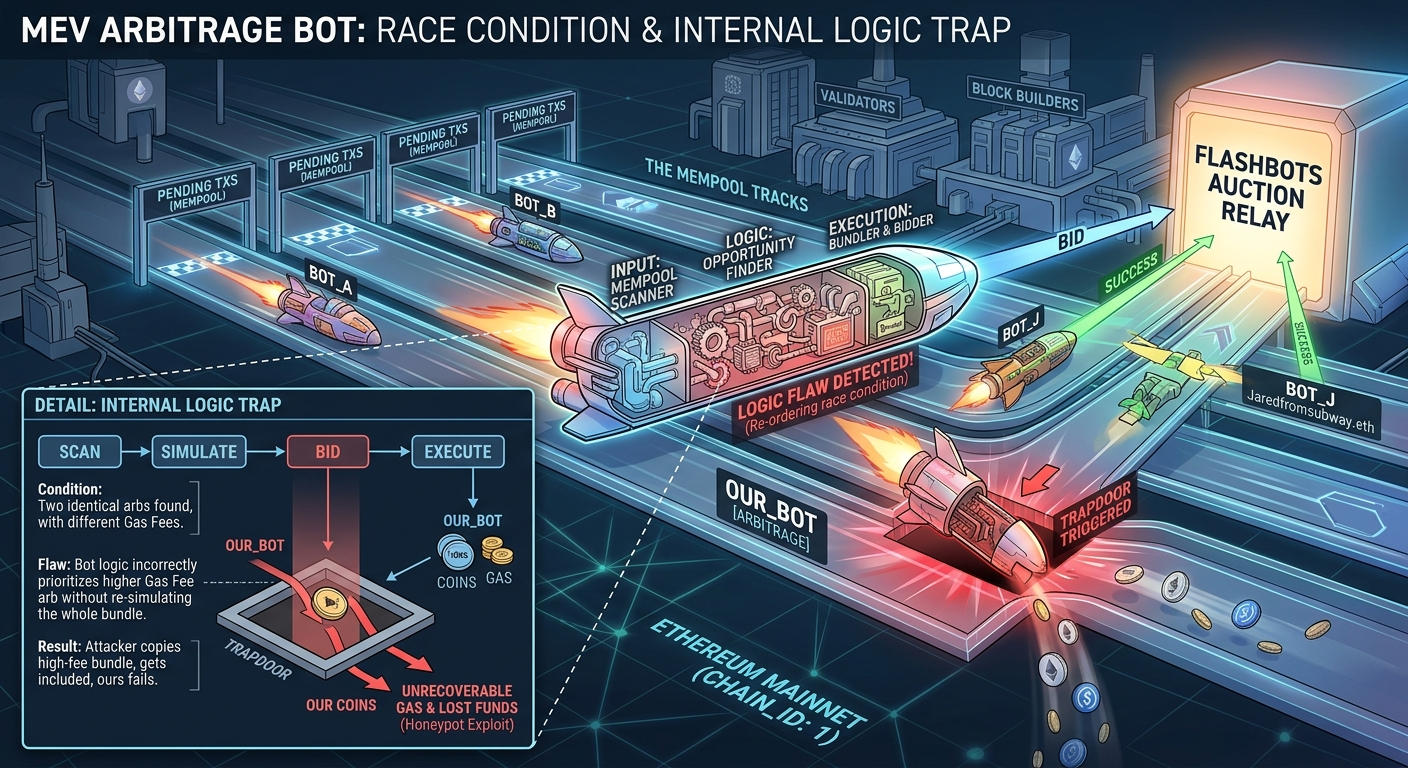
Here’s what happened: The bot frontran a Uniswap V3 swap, then tried to backrun the same transaction for profit. But it didn’t check if its own frontrun had already moved the price. The result? It bought high, sold low, and the MEV it tried to capture went straight to the mempool.
> The bot’s own design flaw made it the victim of its own strategy.
This isn’t a one-off. I’ve seen similar patterns in private mempool setups, flash loan arbitrage bots, and even some “audited” DeFi protocols. The root cause is always the same: assuming transaction ordering is static when it’s actually dynamic.
The Transaction-Ordering Trap
Most MEV bots work like this:
1. Scan mempool for profitable transactions.
2. Submit a frontrun transaction.
3. Submit a backrun transaction.
The problem? Step 2 and step 3 aren’t atomic. If your frontrun lands before your backrun, you’re fine. But if the network reorders them—or if a validator picks a different sequence—you lose.
This bot’s mistake was using a single contract call for both steps. It assumed the order would hold. But in Ethereum, transaction order is determined by gas price, not contract logic. A higher-gas competitor can jump ahead.
Your First 5 Bounty Reports Got N/A — Here's Why covers a similar pattern: assuming your input is the only one that matters.
How to Fix It
The fix is boring but effective: separate your frontrun and backrun into two independent transactions. Use a relayer or a private mempool to ensure ordering. Or, if you must use a single contract, add a check that the price hasn’t moved since your last observation.
Here’s the code diff:
```solidity
// Vulnerable
function executeArbitrage(address pool, uint256 amount) external {
uint256 priceBefore = getPrice(pool);
// ... swap logic
uint256 priceAfter = getPrice(pool);
require(priceAfter > priceBefore, "No profit");
}
// Fixed
function executeArbitrage(address pool, uint256 amount) external {
uint256 priceBefore = getPrice(pool);
// ... swap logic
uint256 priceAfter = getPrice(pool);
require(priceAfter > priceBefore, "No profit");
// Add: check that no other transaction moved price between
// your frontrun and backrun
require(block.timestamp == lastUpdate, "Stale price");
}
```
I could be wrong here, but I think most bots skip this check because they assume their own transaction is the only one in the block. That’s a dangerous assumption.
The Real Cost
$25M is a lot, but it’s not the only loss. I’ve seen bots lose $500k, $1M, even $10M to the same bug. The pattern repeats because developers optimize for speed over safety.
The Approval Timeout Trap That Drains Wallets shows a similar issue: assuming a timeout will protect you when it actually creates a window for attackers.
The lesson: test your assumptions. Don’t assume transaction ordering. Don’t assume price stability. Don’t assume your code is the only code running.
What to Do Next
If you run a MEV bot, audit your transaction-ordering logic. If you don’t, learn from this mistake. The next time you see a “profitable” opportunity, ask: what if I’m wrong?
The best code is the code that never runs. But if it does run, make sure it’s safe.
🔎 Found this useful? Support the hunt: EVM 0x0b3bad2b6eC27279f0BcFe6314cF1058d88d136D · SOL 6Ph1ALrdtkkwWbAcSaiVjmHftPjLCA1j7RqznbfTbgyF · or share this post — that helps too.
Disclosure: some links here are affiliate links. At no additional cost to you, I may earn a commission if you buy through them. I only recommend things I’ve actually used.
Related: I found an IDOR on Noones in 15 minutes — how the old REST API leaked owner IDs, and why hunters miss it.


Comments
Post a Comment
Thanks for reading! Share your thoughts below