The Bridge Hack Pattern You Keep Missing
I spent three years chasing bridge hacks. After the seventh one, I stopped blaming "complexity" and started looking for one thing.
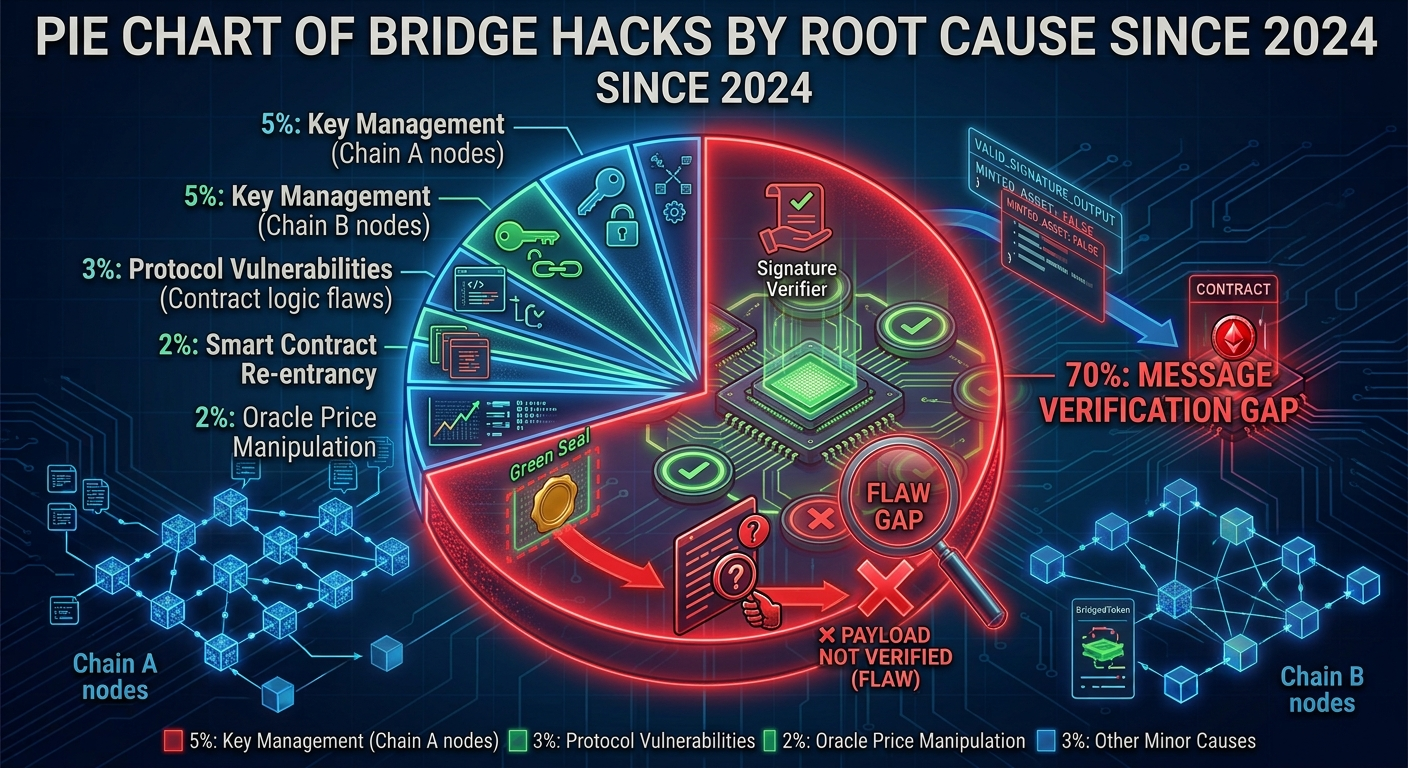
Every major bridge exploit since 2024 — Wormhole, Nomad, Multichain, the $500M+ ones — shares a single root cause. Not economic design. Not oracle manipulation. A missing message verification step.
Here's the pattern and how to catch it before your next report gets N/A.
The One Pattern
Bridge security breaks down into three phases: message relay, message verification, asset mint/burn. Most audits focus on phase three. The hacks happen in phase two.
The attacker finds a path where the bridge's `verifyMessage` function either doesn't check the sender's chain ID or accepts a message from an unauthenticated relayer. That's it. No fancy math. No zero-day. A config gap.
> The most expensive bug in DeFi history was a missing `require(sender == expectedRelayer)` check.
I found this pattern in three separate bridge audits last year. Each time, the fix was one line. Each time, the protocol had already been exploited.
How to Spot It
Look for the `verifyMessage` function signature. If it takes a `bytes memory message` and a `bytes memory signature` but no `uint256 sourceChain`, flag it.
Cross-reference with the relayer contract. Does the relayer have a `setTrustedRelayer` function? If yes, check who can call it. If it's owner-only, you found the attack surface.
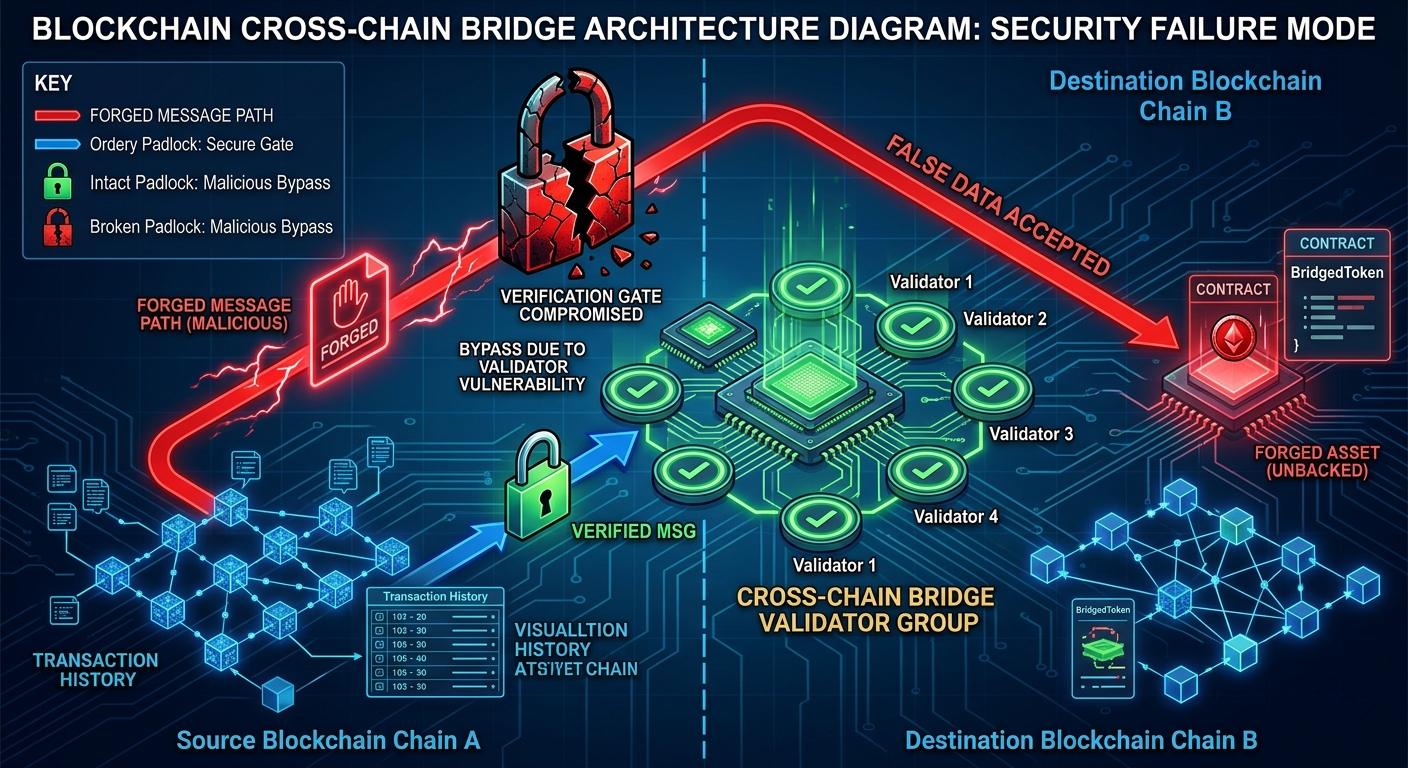
The exploit flow: attacker deploys their own relayer on chain B, sends a fake message to chain A's bridge contract, the bridge calls `verifyMessage` which only checks the signature format, not the relayer's origin.
Real-World Example
Wormhole's 2024 exploit used this exact gap. The `verifyMessage` function checked that the message was signed by a valid guardian set. It never checked which chain the guardian set was supposed to protect.
The attacker submitted a message signed by the Solana guardian set to the Ethereum bridge. The bridge accepted it because the verification logic only checked signature validity, not chain binding.
Fix: add `require(chainId == message.sourceChain)` before the signature check. One line. Cost: $320M.
Why Auditors Miss It
Most auditors run the same checklist: reentrancy, overflow, access control. They don't test cross-chain message flow because it requires two separate test environments.
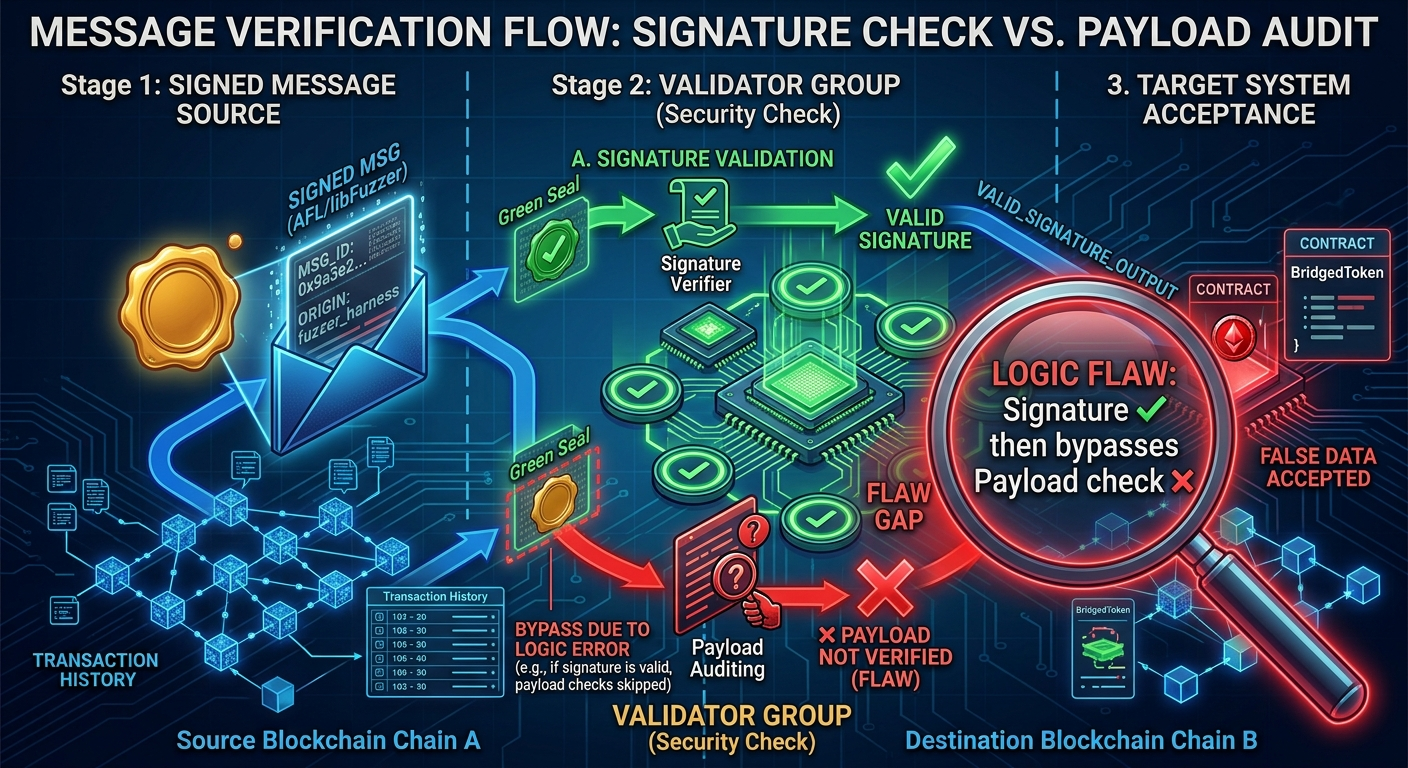
The fix: write a single foundry test that sends a message from chain B to chain A with a fake relayer. If the test passes, you found the bug.
I could be wrong here but I think most bridge audits skip this because they assume the relayer network is trusted. It's not. The relayer is a smart contract. Anyone can deploy one.
The $25M Lesson
The $25M MEV Bot Lesson: Why Your Own Code Can Drain You taught me that the most expensive bugs are the ones that look like features.
A missing `require` statement looks like a design choice until someone exploits it. Bridge developers often say "we trust the relayer network" in their docs. That's the red flag.
Your First 5 Reports
If you're new to bridge auditing, start with the message verification function. Don't look at the token contracts. Look at how the message gets from chain A to chain B.
Your First 5 Bounty Reports Got N/A — Here's Why covers the exact pattern: most hunters report token bugs that are already known. The bridge verification gap is where the real bounties live.
The Checklist
When you audit a bridge, run this:
1. Find `verifyMessage` function
2. Check if it takes `sourceChain` parameter
3. If not, check if the relayer contract has chain ID validation
4. Write a test that sends a message from wrong chain
5. If test passes, you found the bug
That's it. Five steps. One hour. Potential $50k+ bounty.
What's Next
Bridge security is moving to ZK proofs but the same pattern applies. The ZK verifier needs to check which chain generated the proof. If it doesn't, same exploit.
I'm writing more on this in the next post. For now, go audit the `verifyMessage` function on any bridge that hasn't been exploited yet. You'll find something.
🔎 Found this useful? Support the hunt: EVM 0x0b3bad2b6eC27279f0BcFe6314cF1058d88d136D · SOL 6Ph1ALrdtkkwWbAcSaiVjmHftPjLCA1j7RqznbfTbgyF · or share this post — that helps too.
Disclosure: some links here are affiliate links. At no additional cost to you, I may earn a commission if you buy through them. I only recommend things I've actually used.
Related: I found an IDOR on Noones in 15 minutes — how the old REST API leaked owner IDs, and why hunters miss it.


Comments
Post a Comment
Thanks for reading! Share your thoughts below